


Complete Guide to Stainless Steel SS Nipple Fittings and Industrial Brass Taps
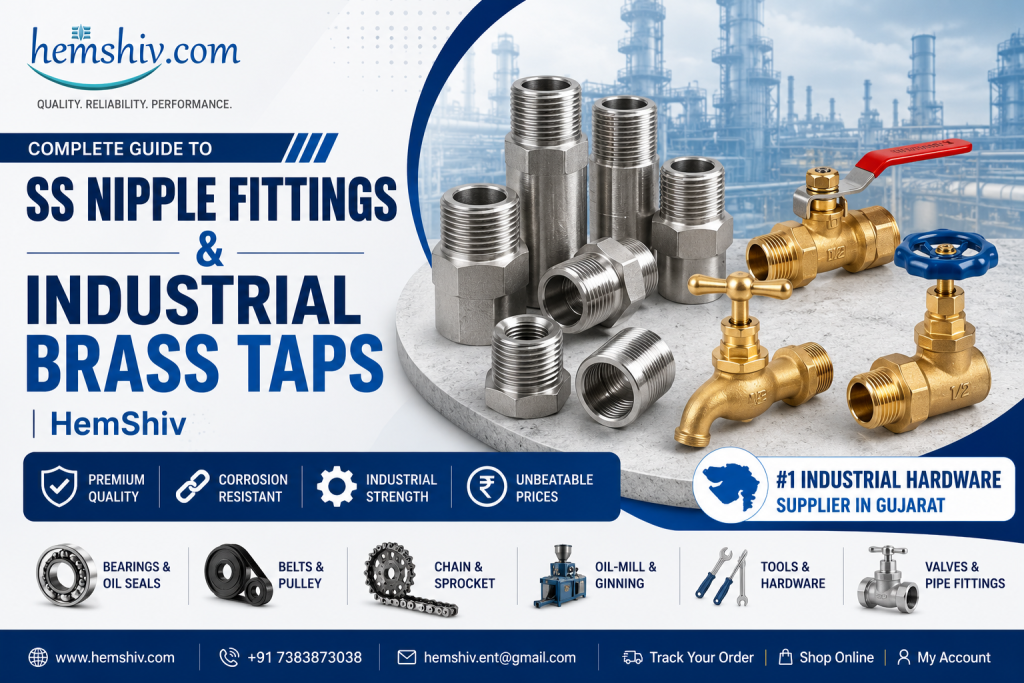
In modern industrial facilities, chemical processing units, and plumbing networks, fluid transport systems must operate without leakage. A single weak connection or corroded pipe joint can cause severe pressure loss, fluid contamination, and costly facility shutdowns. To ensure durable, leak-proof performance, choosing high-grade components like a precision ss nipple and a heavy-duty brass tap is essential.
However, selecting the right fluid fittings requires a clear understanding of metal grades, thread standards, pressure ratings, and corrosion resistance. In this comprehensive technical guide, we break down everything you need to know about stainless steel nipples, industrial brass taps, and the mechanical tools required for installation.
1. What Is an SS Nipple and Why Is It Vital for Industrial Piping?
A ss nipple (stainless steel pipe nipple) is a short length of precision pipe featuring male National Pipe Taper (NPT) or British Standard Pipe (BSP) threads at both ends, or at one end. It acts as an essential threaded bridge between female-threaded fittings, valves, pumps, and machinery manifolds.
Primary Functions of an SS Nipple
- Connecting Valves & Gauges: Connects pressure gauges, ball valves, and regulators directly into rigid pipeline networks.
- Extending Pipe Runs: Provides small, rigid extensions through bulkheads, tank walls, and machine enclosures.
- Corrosion-Proof Fluid Transfer: Allows safe transport of aggressive chemicals, steam, coolant, and potable water without rusting.
2. Common Types and Configurations of Stainless Steel Nipples
Selecting the proper ss nipple configuration ensures a precise, leak-free mechanical fit across different pipeline diameters and pressure ratings.
| SS Nipple Type | Structural Design | Primary Industrial Use |
| Barrel Nipple | Threaded at both ends with unthreaded middle pipe | General plumbing, steam lines, and standard extensions |
| Hex Nipple | Hexagonal center section between threaded ends | Easy tightening in tight spaces using a ring spanner |
| Close Nipple | Fully threaded with almost no unthreaded pipe | Joining two female fittings in extremely compact layouts |
| Swage / Reducing Nipple | Connects larger pipe size to smaller pipe size | Flow reduction and connecting mismatched line sizes |
| Welded Nipple | Male thread on one side, plain beveled end on the other | Welding directly to high-pressure tanks or headers |
Material Grades: SS 304 vs. SS 316
- SS 304 Nipple: Standard commercial grade offering excellent rust resistance in water, air, food processing, and general utility lines.
- SS 316 Nipple: Contains 2% molybdenum, making it superior for harsh marine environments, acid lines, and aggressive pharmaceutical processing.
Procurement Tip: Always confirm thread standards (NPT vs. BSPT) and schedule thickness before ordering. Browse certified fluid fittings directly at HemShiv Valves & Pipe Fittings.
3. Industrial Brass Taps & Locking Utility Valves
Brass remains the gold standard alloy for general fluid regulation due to its high machinability, structural strength, and natural resistance to scale buildup.
Standard Brass Tap
A standard industrial brass tap regulates water flow for machine washdown stations, agricultural irrigation lines, and cooling loops. Forged brass handles thermal fluctuations efficiently without cracking under moderate freezing or boiling temperatures.
Brass Tap with Lock: Security & Anti-Theft
In shared industrial estates, outdoor utility points, and construction yards, unregulated water usage causes substantial utility waste.
- Locking Eyelet Design: A brass tap with lock integrates a dedicated padlock flange on the handle mechanism.
- Prevents Unauthorized Access: Secures water lines during off-shift hours or plant shutdowns.
- Avoids Accidental Opening: Protects against accidental valve activation in busy, high-traffic factory corridors.
4. Mechanical Spares & Power Transmission: Complete Machinery Ecosystem
Piping systems and fluid lines do not run in isolation. In processing plants, oil mills, and ginning units, fluid lines feed cooling and lubrication directly into heavy rotating machinery.
| Mechanical Component | Key Feature | System Role |
| Roller Chain Lock | High-tensile master connecting link | Joins roller chain loops on elevators and conveyors |
| SKF Bearing | Deep groove / spherical roller design | Reduces rotational friction on motor drive shafts |
| V-Belts & Pulleys | Cogged wedge / Mitsuboshi series | Delivers non-slip torque transfer from electric motors |
| Oil Seals | High-grade nitrile rubber | Keeps bearing grease inside while blocking moisture |
Supporting Drive Integrity with Chain Locks & Bearings
When pumps move fluids through an ss nipple network, drive motors rely on genuine skf bearing units to maintain smooth rotation. Simultaneously, drive conveyors utilize a hardened roller chain lock to keep drive chains connected securely under continuous mechanical load.
5. Essential Installation & Maintenance Hardware
Assembling leak-proof threaded joints and maintaining heavy pipe networks requires professional tools and sealants.
Precision Ring Spanners
When installing a hex-style ss nipple, using an open-ended wrench can slip and round off the metal corners. A Chrome-Vanadium ring spanner surrounds the hex body with a 12-point profile, distributing torque evenly across all sides.
Industrial Sealants (Resi Bond)
Thread tape can sometimes shred under extreme fluid velocity. Applying a high-strength liquid sealant like resi bond to pipe threads ensures a 100% hermetic seal, resists continuous vibration, and prevents chemical corrosion between mating threads.
Gas Cutting Torches & Alignment Level Pipes
- Gas Cutting Torch: Essential for cutting structural steel supports, modifying header brackets, and dismantling obsolete pipe runs.
- Level Pipe: Clear level pipe tools enable maintenance crews to verify precise slope gradients across long gravity-drained drainage runs.
6. How to Install and Maintain Threaded SS Nipples
- Inspect and Clean Threads: Remove all metal filings, rust, and old sealant from female ports before inserting the ss nipple.
- Apply Joint Compound Evenly: Wrap PTFE thread seal tape clockwise around male threads, or apply an even coat of resi bond thread sealant.
- Avoid Over-Torquing: Thread the ss nipple by hand first. Then, use a properly sized ring spanner or pipe wrench to tighten 1.5 to 3 turns past hand-tight. Over-tightening can crack female casting bodies.
- Conduct Pressure Testing: Always test the piping circuit with compressed air or water to verify zero bubble leaks before launching full production.
For certified fluid fittings, valves, bearings, and workshop hand tools, explore the complete catalog at HemShiv Enterprise Industrial Store.
Frequently Asked Questions (FAQs)
What is the primary use of an SS nipple in industrial piping?
An ss nipple is a short threaded pipe fitting used to connect two female-threaded pipes, valves, or instruments together. Stainless steel construction ensures high corrosion resistance and high pressure tolerance.
Which is better for industrial plumbing: SS 304 or SS 316 nipple?
An SS 304 nipple is suitable for general water, air, and mild food processing lines. An SS 316 nipple contains added molybdenum, making it the better choice for chemical processing, marine applications, and aggressive acid lines.
Why should I install a brass tap with lock in my facility?
A brass tap with lock features a built-in eyelet that lets you lock the handle with a padlock. This design prevents unauthorized fluid use, tampering, and accidental valve opening in shared industrial compounds.
Can an SS nipple be used for high-temperature steam lines?
Yes. Heavy-wall (Schedule 40 and Schedule 80) stainless steel nipples can easily handle high-temperature and high-pressure saturated steam lines without degrading.
Where can I buy industrial SS nipples and brass taps online in India?
You can order certified ss nipple fittings, brass tap with lock units, skf bearing components, and chain lock links directly through HemShiv Enterprise with pan-India delivery.


